




Hair Transplant Turkey: What is it exactly?
Hair Transplant Turkey refers to the medical tourism practice of traveling to Turkey for hair restoration surgery. The surgery involves moving healthy hair follicles. We extracts follicles from a donor area, usually the back of the head. These follicles are then implanted into areas where the hair is thinning or bald.
Patients from around the world choose Turkey for its comprehensive packages, often including accommodation and transfers.
How Is Hair Transplant Turkey Surgery Performed?
Hair transplant Turkey is performed using techniques that offer natural results with minimal discomfort. The most commonly used methods are FUE (Follicular Unit Extraction) and DHI (Direct Hair Implantation), both of which are minimally invasive and do not leave visible scars.
The procedure begins with a detailed consultation and scalp analysis. After determining the hairline design and the number of grafts needed, the donor area (usually the back of the head) is prepared. Local anesthesia is applied to ensure a painless experience throughout the process.
In FUE, hair follicles are individually extracted from the donor area using micro-punch tools. These grafts are then carefully implanted into the recipient area following the natural direction of hair growth. In DHI, grafts are implanted directly using a special pen-like device, which allows for precise placement and denser results.
Surgery at Dr. Terziler Clinic usually takes 6 to 8 hours, depending on the number of grafts. After the procedure, patients can return to their hotel on the same day.
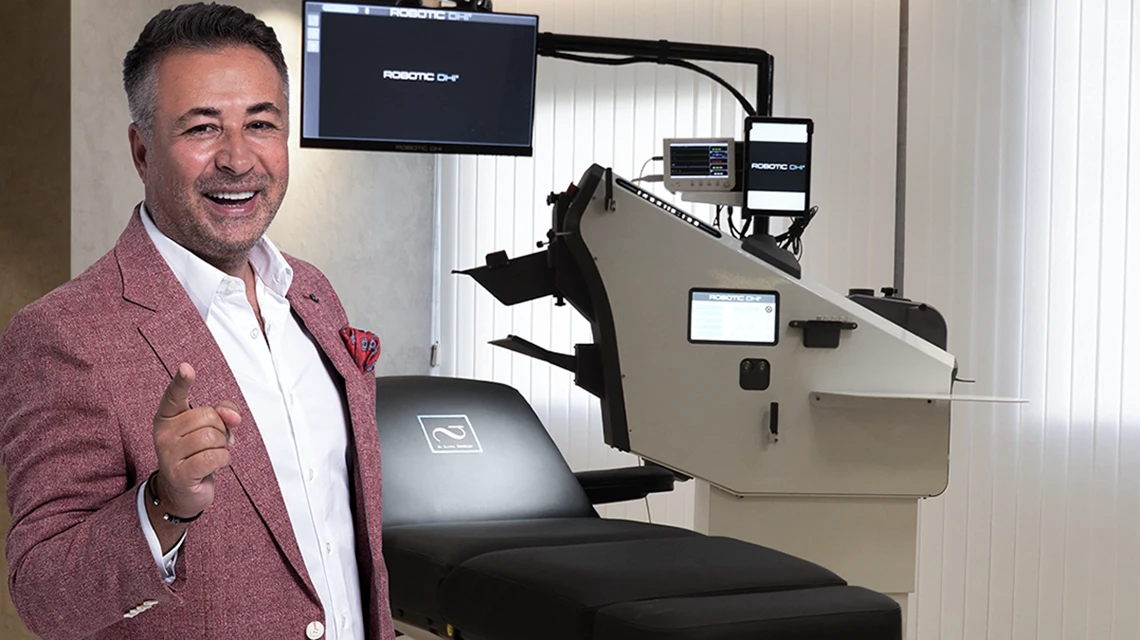
Why Dr. Terziler’s Exclusive Hair Clinic?
Dr. Terziler Exclusive Hair Clinic knows that everyone’s road to hair restoration is different. Our team dedicates itself to providing personalized hair transplant solutions. We support you from the first consultation to the final results, tailored to your needs.
Our treatments aim for success and long-term happiness. They can restore a natural-looking hairline or increase hair growth.
Our clinic offers high-quality hair transplant treatments for all hair types. This includes curly hair and African American hair. We use modern methods to ensure the best results.
We offer options for people thinking about a second hair transplant. This is for those who are completely bald and need more density and coverage.
Who Is a Good Candidate for a Hair Transplant?
You may be a suitable candidate if:
You have androgenetic alopecia (male/female pattern baldness)
You have a stable donor area with enough hair density
You’re in good overall health
Your hair loss has stabilized (not actively progressing quickly)
You have realistic expectations
Women can also undergo hair transplants, particularly for temple thinning, hairline lowering, or traction alopecia.
Do Hair Transplant Turkey Packages Cover Hotel Accommodation?
Yes, almost all hair transplant Turkey packages cover hotel accommodation. This is a standard part of the all-inclusive hair transplant service model. Hotels is often located near the clinic. The package price bundles the surgery, hotel, and airport transfers. This approach simplifies the travel logistics for you. It allows you to focus only on your procedure and recovery.
What Is The Failure Rate Of Hair Transplant Turkey?
The failure rate for hair transplant Turkey depends entirely on the clinic and surgeon. There is no single official failure rate for the country.
Reputable clinics (like Dr. Terziler) have success rates well above 95%. The risk of failure is minimized by choosing an accredited clinic. Always thoroughly research your doctor’s qualifications.
Reasons to Get a Hair Transplant Turkey
First, cost-effectiveness is a major advantage. Compared to clinics in Europe, the UK, or the US, hair transplant Turkey clinics are significantly more affordable.
Another reason is comprehensive service packages. Most clinics offer all-inclusive deals that cover the procedure, airport transfers, hotel accommodation, translator support, and aftercare. This makes the entire process smooth and stress-free, especially for international patients.
Hair Transplant Turkey Recovery Period
Before undergoing the operation, people take into account hair transplant Turkey recovery time, which is a vital factor. Usually, we anticipate a short period of rest after the operation. There could be little pain, redness, and swelling at both the donor and recipient sites in the first several days.
Many transplanted grafts enter a resting period right after the operation. This means that while healing is happening, you may not see noticeable hair growth right away.
Avoiding intense activities for a couple of weeks is best. However, patients can usually return to light activities a few days after the procedure.
Regular follow-up visits with a professional help ensure that recovery goes well. They also address any signs of infection or problems quickly. Transplanted hairs commonly fall out in the first few weeks. New hair usually starts growing in three to four months.
New hair follicles grow and blend with existing hair. You usually see full results from a hair transplant Turkey after 12 to 18 months. Patients can recover smoothly and have better long-term results by carefully following post-operative care guidelines. This includes proper scalp care and scheduled check-ups.
Recovery Timeline After Hair Transplant Turkey
| Timeframe | What Happens |
| Days 1–3 | Mild swelling and redness; avoid touching |
| Day 4–7 | Scabs begin to form and harden |
| Day 10–14 | Scabs fall off; you can wash more normally |
| Week 3–6 | Shedding phase (normal shock loss) |
| Month 3–4 | New hair starts growing |
| Month 6–9 | Noticeable thickening and growth |
| Month 12–18 | Full results visible |
Does Hair Transplant Require Head Shaving?
Shaving the head in hair transplant Turkey varies with the method employed. Usually, the donor region for FUE (Follicular Unit Extraction) is shaved to enable exact follicle implantation and extraction.
Shaving guarantees improved sight for surgeons, hence enhancing transplant survival and natural placement. Some facilities, meantime, provide “unshaven” or partial shaving for DHI (Direct Hair Implantation) if the patient wishes to retain current hair.
While considering medical requirements, Turkish hospitals give patient choice first priority. Though experienced surgeons change to unshaven techniques for inconspicuous healing, shaved operations may produce the best outcomes because of simplified workflow. As transplanted hair grows naturally, shaved regions merge fast post-op.
Hair Transplant Turkey Cost 2026
Hair transplant Turkey cost for 2026 typically starts $1,500 USD. A maximum price of $8,000 USD can be considered. Pricing varies depending on factors such as the number of grafts and the type of procedure (FUE, DHI, Robotic). Contact us now for detailed package information.
Frequently Asked Questions
Must one have a visa for hair transplant Turkey?
Your nationality will determine visa requirements for hair transplant Turkey. Many nations, including the EU, US, and UK, enjoy visa-free entrance or e-visa eligibility for short-term medical tourism trips.
Turkey’s e-visa program lets visitors apply online in under minutes for stays up to 90 days, hence streamlining the procedure. Often, medical travelers qualify under tourist visas as treatments seldom last longer than this. Always verify current regulations on Turkey’s official visa site or ask your nearby embassy.
While certain nations need a conventional visa, clinics in Turkey sometimes help with invitation letters to expedite processing. Make sure your passport is valid for at least six months following travel.
Is hair transplant charged per graft?
Not at all. Our center charges different amounts for procedures like Picasso Robotic DHI, Robotic DHI, and Sapphire FUE, based on the method chosen and other personalized treatments.
It means that instead of charging per graft, our price is based on the type of treatment chosen and the specific needs of each tourist.
Does hair transplant hurt?
Local anaesthesia and sedative utilized throughout hair transplant Turkey operations usually make them not painful. Though it goes away fast, patients could experience little discomfort during anesthetic injection.
Commonly used in Turkey, modern methods like as DHI and FUE decrease tissue damage, hence lowering post-operative pain. Most our patients say the feeling is pressure instead than pain.
Though recommended drugs efficiently control these symptoms, post-surgery minor swelling or soreness may happen.
Are Hair Transplant Outcomes Permanent?
Typically lasting, hair transplant Turkey outcomes come from transplanted follicles resistant to balding hormones including DHT. Usually the back of the scalp, “safe” donor zones provide these follicles, which genetically preserve hair development.
Over time, current non-transplanted hair can still thin, calling for maintenance treatments to be required. Our clinic advise patients on long-term treatment to maintain outcomes.
Though transplanted hair usually grows naturally for life, factors like age, genetics, and post-op care affect lifetime.
Does Hair Transplant Fall Out?
It’s normal for transplanted hair to fall out in the weeks after your surgery. This might seem worrying, but it’s part of the healing process.
Here’s why it happens:
- “Shock Loss”: The transplanted hair follicles go into a resting phase (called “telogen”) and the hair shafts usually fall out about two to six weeks after the operation. This is sometimes called the “shock” phase.
- A Sign of Healing: Even though it can be concerning, this shedding shows that the new follicles are settling into their new spot and getting ready to grow new hair.
After this resting time, the follicles will start actively growing again (the “anagen” phase). Most people begin to see new hair growth about three to four months after surgery. This new hair will continue to get thicker and stronger for up to a year.
As long as your scalp is healthy and you follow the after-care instructions, the hair that grows back should be permanent. This is because the transplanted follicles come from areas of your head that are naturally resistant to hair loss caused by hormones.
Do Hair Transplant Look Natural?
When done by knowledgeable professionals, new hair transplant techniques can seem natural. Out techniques positioning each follicular unit at the appropriate angle, depth, and orientation to imitate your natural hair growth pattern achieves this realism.
Artistry is also quite important; skilled teams create the hairline and general distribution to fit your face measurements and age, hence producing gentle, uneven edges instead of straight, synthetic lines. Microscope-assisted graft preparation increases survival rates even more, therefore enabling natural integration of transplanted hairs when they start their growth phase.
Tiny puncture holes that shut fast make healing almost unnoticeable; good post-procedure care (such as mild washing and avoiding direct sun exposure) helps grafts settle without noticeable scars. Renewed hair growth hides any surgical signs within six to nine months.
How many days are required in Turkey for a hair transplant operation?
A hair transplant Turkey typically takes three to four days. On the first day, we’ll conduct a medical examination and initial consultation, during which we’ll evaluate your donor area, plan graft placement, and perform all necessary pre-operative tests.
The second day is the transplant day. This procedure can take four to eight hours. The time depends on the number of grafts and the technique used. This ensures that each follicle is harvested and transplanted with precision.
Will I need a second session?
You may need a second hair transplant session if your hair loss is extensive or future thinning is expected. Some patients require multiple sessions to achieve desired density or cover larger balding areas, especially with advanced hair loss. A second session might also be recommended to enhance natural appearance or correct previous transplant results.
The need depends on factors like donor hair availability, scalp condition, and long-term hair loss progression. We assess this during consultation and plan accordingly. Even with one session, our results can be significant, but follow-up procedures may optimize overall coverage and satisfaction.
What happens 10 years after a hair transplant?
Ten years after a hair transplant, most implanted hairs remain permanently, but natural hair loss may continue around them.
The transplanted follicles are genetically resistant to balding and typically grow for a lifetime. However, non-transplanted hair may thin over time, possibly creating uneven density. Some patients choose a second session to maintain overall appearance as natural loss progresses. Proper hair care, a healthy lifestyle, and follow-up checkups help prolong results.
Can I safely go to Turkey for a hair transplant?
Our advice is to choose a facility with the appropriate certifications and knowledgeable medical staff to ensure a safe trip to Türkiye for a hair transplant. Most clinics hold ISO or Joint Commission International (JCI) certifications, meaning their patient monitoring systems, sterilization procedures, and operating rooms meet global healthcare standards.
Author: Dr. Servet Terziler


